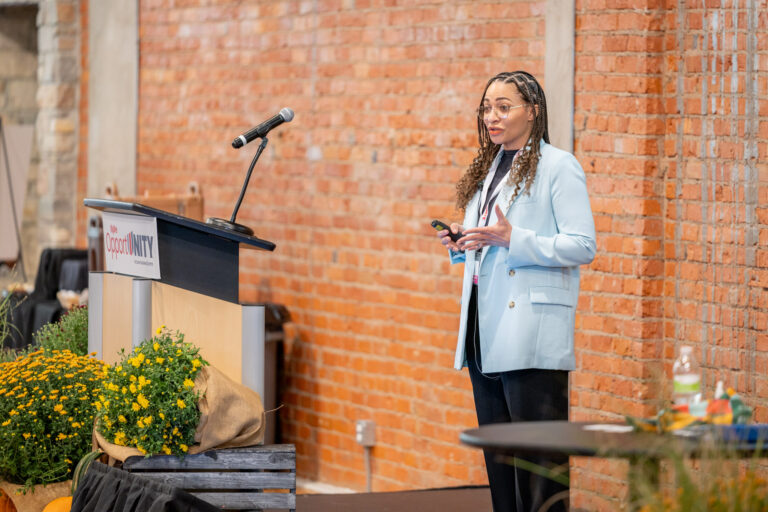

U.S. Department of Energy Deputy Secretary James Danly made a case Tuesday for what he called a “nuclear renaissance” in America, telling a Cedar Rapids audience at the Corridor Business Journal’s annual Energy Symposium that rising electricity demand — fueled in large part by data centers and artificial intelligence — makes expanding nuclear capacity not just desirable but essential.
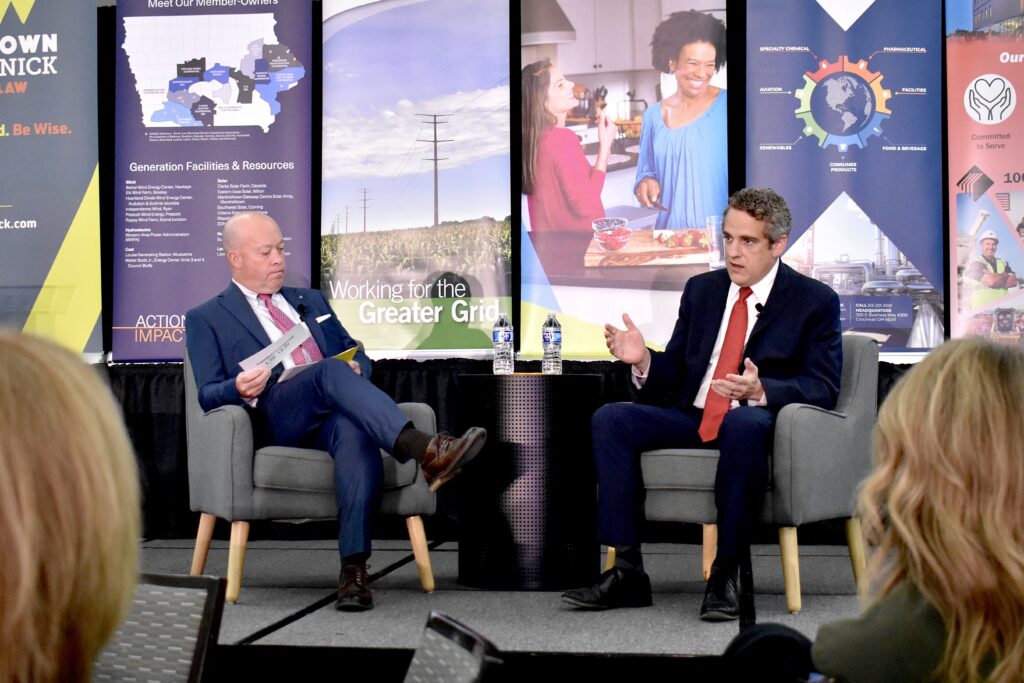
Mr. Danly spoke with CBJ CEO John Lohman during a fireside chat at the event, Tuesday, June 23, at The Hotel at Kirkwood Center, where discussion centered on the planned restart of the Duane Arnold Energy Center, Iowa’s only nuclear facility. The 615-megawatt plant, which began decommissioning in 2020, is expected to return to operation by early 2029 under NextEra Energy’s management, with a 25-year power purchase agreement anchored by Google and Central Iowa Power Cooperative providing what NextEra’s senior director of nuclear development, Garrett Goldfinger, called the “economic certainty” necessary to move forward.
For Mr. Danly, that commercial arrangement is exactly the model the federal government wants to encourage.
“What you want is to set the conditions where people can pursue those commercial arrangements with surety that they’re going to be able to arrange things to their own benefit on both sides,” he said.
Mr. Danly outlined the Trump administration’s nuclear ambitions, including a goal to have 10 new large-scale reactors under construction by 2030 and to quadruple total installed nuclear generation by 2050. That plan encompasses reactor restarts like Duane Arnold, upgrades to existing plants to increase their output, new gigawatt-scale builds, and the rapid commercialization of small modular reactors. The DOE recently announced two criticality milestones for prototype SMRs — a benchmark the president set just 10 months ago with a July 4 target.
On the question of whether everyday ratepayers should worry about data centers driving up electricity costs, Mr. Danly pushed back on the premise. He said large industrial users shoulder a proportionally greater share of a utility system’s fixed costs, which can help keep rates lower for residential customers. He also noted that major hyperscalers signed a “rate protection pledge” at the White House, committing to bring more new generation onto the transmission system than they consume.
“The best thing that can happen over the long term is that demand comes online because the prosperity comes online,” Mr. Danly said.
Mr. Danly acknowledged that workforce development and supply chain constraints — including transformer shortages with delivery timelines stretching to three years — are real challenges facing the industry nationally. He said DOE has a dedicated office working on nuclear supply chain issues, including domestic fuel production and critical minerals, while the department coordinates with the Departments of Commerce, Education and Labor on expanding the pipeline of trained nuclear workers and STEM graduates.
He also addressed the ongoing relationship between DOE and the Nuclear Regulatory Commission, saying the two agencies have worked to reduce duplicative review processes while maintaining rigorous safety standards — a partnership he said is directly relevant to projects like Duane Arnold.
When asked what keeps him up at night, Mr. Danly pointed to organized electricity markets and whether their rate structures properly incentivize new generation investment.
“If you don’t employ the forces of the free market, you’re not going to get the potential benefits and development that you need,” he said.
Iowa Attorney General Brenna Bird, who toured Duane Arnold earlier Tuesday, introduced Mr. Danly at the event and called the recommissioning a “blessing” for the state. Once fully operational, the plant is projected to employ approximately 400 full-time workers and generate more than $9 billion in economic impact for Iowa.