
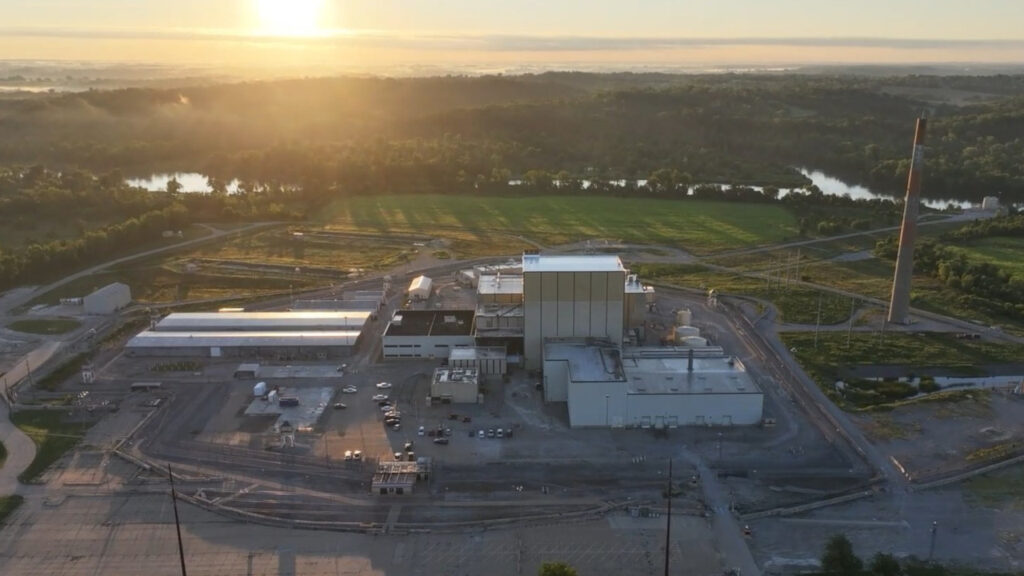
The push to restart the Duane Arnold Energy Center began almost immediately after the facility ceased operations following the August 2020 derecho, as local residents and experts questioned the shutdown decision.
That drumbeat has become a full-fledged chorus in the past year. Electrical power demand, which had remained relatively flat for decades, is surging rapidly, spurred in large measure by the ongoing development of data centers in Linn County.
As a result, Florida-based NextEra Energy Resources — the majority owner of Duane Arnold — has conducted a comprehensive engineering evaluation of the entire site, which has been largely propelled ahead by the announced power purchase agreement between NextEra and Google.
But the decision to restart a nuclear energy plant near Palo isn’t a simple one to make. Several factors need to be considered — safety, cost, environmental impacts, government regulations, economic potential and more.
Many of these factors have now been addressed, and NextEra is continuing its effort to receive regulatory approval to restart the plant and bring its power generation back to the Corridor, potentially as soon as the first quarter of 2029.
History of Duane Arnold
The Duane Arnold Energy Center, Iowa’s only nuclear power plant, is located approximately nine miles northwest of Cedar Rapids.
Duane Arnold is a single-unit boiling water reactor with a nameplate production capacity of 615 megawatts that began commercial service in 1975. NextEra Energy acquired a 70% ownership stake in 2006, and operated the facility with nearly-constant energy production and a solid safety record for 45 years.
However, the plant shut down after the August 2020 derecho brought 140 mph winds that heavily damaged cooling towers and other infrastructure,
NextEra Energy officials said.
Prior to the storm, the plant was scheduled to be decommissioned in October 2020 after its main customer, Alliant Energy, paid $110 million in 2018 to exit its power purchase agreement with the plant five years earlier than planned. At the time, Alliant spokesman Justin Foss said the deal for early decommissioning of Duane Arnold came about as a result of discussions on extending the utility’s power purchase agreement (PPA) with the plant. The power prices quoted by NextEra did not seem appealing for Alliant’s customers, Mr. Foss said.
Despite the shutdown, the facility was never completely dismantled, according to an August article published by Sustainability Times. The reactor was defueled, and the nuclear fuel was securely stored on-site. The plant entered SAFSTOR, a deferred decommissioning status allowing for safe maintenance while residual radioactivity decays. The process preserved much of the plant’s infrastructure, making a potential restart feasible.
This process has kept the plant’s core infrastructure largely intact, according to Interesting Engineering. An initial engineering assessment found the reactor to be in good condition, suggesting the entire plant could potentially be restored to operation.
Status of recommissioning
NextEra Energy began efforts in earnest to restart the plant in January of 2025, asking the Nuclear Regulatory Commission to restore Duane Arnold’s operating license, in hopes to begin energy production operations by the end of the decade.
According to a Sept. 1 CNBC article, the plant is the third — and likely the last — mothballed reactor in the U.S. that could come back online to support growing electricity demand in the U.S.
If approved, Duane Arnold would follow similar restarts planned for the Palisades nuclear plant in Michigan and the Crane Clean Energy Center in Pennsylvania — formerly known as Three Mile Island — which plan to resume operations later this year and in 2027, respectively, subject to final approval by the Nuclear Regulatory Commission.
The data center industry’s demand for round-the-clock, zero-carbon electricity has created opportunities to restart decommissioned nuclear plants, Law360 reported in August. But restarting a plant is far from simple, attorneys who work on nuclear matters said.
“Recommissioning a shut-down reactor isn’t flipping a switch,” said Amy Roma, who leads Hogan Lovells global energy practice and specializes in nuclear law. “Recommissioning a shut-down reactor is a combination of relicensing, rebuilding and recontracting.”
According to Law360, when nuclear plants are decommissioned, their operating licenses from the U.S. Nuclear Regulatory Commission (NRC) are revised. Those revisions would need to be reversed before any plant is recommissioned, including restarting programs covering safety, environmental controls, maintenance and security.
The NRC is the primary agency that must approve any plant restart, but attorneys say plant owners also need to fully restore any necessary state or local permits that may have lapsed or revised when the plant was decommissioned.
Duane Arnold, Palisades and Three Mile Island are three of the 10 U.S. reactors that closed over the past decade as nuclear power strained to compete against cheaper natural gas and renewable energy sources.
But now that demand has increased, the business case for restarting nuclear plants has grown exponentially stronger.
“These are unique opportunities, because you don’t face the new build costs associated with nuclear,” NextEra president and CEO John Ketchum said on a NextEra earnings call in July. “These are really unicorn-type opportunities.”
NextEra, the largest renewable power developer in the U.S., had previously divided up Duane Arnold’s grid connection among multiple solar farms near the plant.
NextEra is now consolidating those solar grid connections back into a single one for Duane Arnold after securing a waiver request in August from the Federal Energy Regulatory Commission (FERC), potentially allowing NextEra Energy to restart the plant.

Bill Orlove, spokesperson for NextEra Energy’s Duane Arnold LLC, said several submissions have already been made to the NRC regarding a potential restart, but noted that the process is complex.
The next submission due, Mr. Orlove said, is an environmental impact study, but filing that report has been delayed by the ongoing federal government shutdown, which has suspended many NRC activities.
He also said the NRC process includes a public meeting, which has not yet been scheduled. At such a meeting, he said, the company would provide background information and updates on the review process. NRC representatives would also be on hand to ask questions.
Why restart?
For the first time in decades, Iowa is seeing a marked increase in electricity demand.
According to Steve Guyer, energy policy counsel for the Iowa Environmental Council, electricity demand is rising in nearly every U.S. state, and Iowa is no exception to that trend.
“Basically in the 1970s and ‘80s was the last time we really saw some market growth,” said Mr. Guyer, who previously worked in environmental roles for both Alliant Energy and MidAmerican Energy and has owned Altoona-based GWA Solar since 2008.
Mr. Guyer said the Midcontinent Independent System Operator (MISO), the electric grid operator for the central United States, regularly provides a 20-year projection of electricity demand and capacity. For Zone 3, which includes Iowa, projections call for an increased load of “anywhere from 22 to 44 terawatt hours” in the next 20 years, with a majority of that coming by the year 2030.
“That’s anywhere from a 30% to a 60% increase from where we are today in overall load, coming rapidly at us,” Mr. Guyer said. “That’s what they see now. Recognize that things might change, and a lot of things are very uncertain at this point. But those are the current projections as we see them right now.”
Anne Kimber, executive director of the Electric Power Research Center at Iowa State University, went even further back, saying Iowa hasn’t seen dramatic growth in electrical energy demand since the 1960s, following decades of flat to slightly increasing year-to-year demand.
She noted that the state’s increased electrical appetite is being driven not only by the sudden increase in data center projects, including the large-scale projects being developed by Google and QTS in southwest Cedar Rapids (and another proposed Google data center near the Duane Arnold plant), but by the state’s ever-expanding industrial and agricultural operations.
The rapid growth can be attributed in large measure to the significantly lower cost of energy in Iowa compared with other parts of the country.
Iowa ranks 41st in the U.S. for electricity prices, according to the U.S. Energy Information Administration (EIA). On average, Iowa residents pay about $152 per month for electricity, which is 38% lower than the national average.
However, Iowa ranks seventh in the U.S. for total energy consumption per capita.
Mr. Orlove said financial factors have been the primary determinant of a potential restart of Duane Arnold. Those factors, of course, have now largely been addressed.
“It comes down to economics,” Mr. Orlove said.
The precedent has been set. Three Mile Island, for example, is moving toward a potential restart with financial support from a power purchase agreement with Microsoft.
Comparing power costs
Perspectives on the cost of nuclear power vary, particularly when being compared to the cost of renewable energy generation sources.
According to the World Nuclear Association, nuclear power is cost-competitive with other forms of electricity generation, except where there is direct access to low-cost fossil fuels.
Fuel costs for nuclear plants are a minor proportion of total generating costs, though capital costs are greater than those for coal-fired plants and much greater than those for gas-fired plants.
In addition, the association says system costs for nuclear power — as well as coal and gas-fired generation — are much lower than for renewables, which provide intermittent power generation.
Cost analyses vary globally, with some studies finding nuclear more expensive than renewables.
Mr. Orlove couldn’t address cost discrepancies between nuclear power and power generated from renewable sources.
“I can’t really delve into that as much, but what I can say is, (nuclear power is) not reliant on the sun or the wind,” he said. “It’s a constant base energy source. In terms of reliability, nuclear has the highest percentage of reliable power. If the sun isn’t shining for some days, you’re losing that generation. If the wind isn’t blowing, you’re losing that generation. So there’s a percentage of power that can be generated from that site, based on the availability of those natural resources.”
According to the Department of Energy, nuclear energy has the highest capacity factor of any other energy source. In essence, nuclear power plants are producing maximum power more than 92% of the time during the year.
Still, Mr. Orlove noted that nuclear energy is not the only piece of the energy generation puzzle. NextEra is not only one of the nation’s largest owners of nuclear energy plants, but has substantial investments in wind and solar energy generation.
“There needs to be an all-of-the-above energy perspective, if we’re going to stay ahead of demand,” Mr. Orlove said, “whether it be from large companies that are looking to build data centers or artificial intelligence platforms, or just from general customers.”
‘Clean energy’ and required resources
Nuclear energy production has been described as “clean” by its advocates, with minimal environmental impact and a carbon-neutral process. It also requires minimal consumption of natural resources.
“Nuclear power is generated through the boiling of water with nuclear fuel, and water is used in natural gas plants to cool equipment,” Mr. Orlove said. “So nuclear power has very little demand on the environment, (compared to) other sources of energy, like coal.”
Still, nuclear plants require uranium, a natural resource, as fuel to operate.
“You can make the argument that uranium is mined somewhere and it has to be processed,” Mr. Orlove said, “but you can make that argument about every form of energy. Whether it’s uranium or certain kinds of metals or materials that are mined for solar panels, or coal that’s brought out of the ground, or natural gas, there’s always some kind of material that needs to be unearthed. From (construction of) wind turbines to solar panels, you still have to build that equipment. It has to come from somewhere.”
However, Wally Taylor of Cedar Rapids, conservation chair and legal chair of the Iowa chapter of the Sierra Club, said that despite assertions from nuclear power proponents, “nuclear power is not clean or renewable.”
“Nuclear reactor fuel is made from uranium, which is mined from the ground, just like oil, gas or coal,” Mr. Taylor said. “No one refers to those energy sources as renewable. Nor is nuclear clean. The uranium that is mined leaves tailings, and uranium processing leaves behind radioactive waste and harmful chemicals. But the really dirty aspect of nuclear power is the radioactive waste, which is radioactive for hundreds of thousands of years, and no one knows what to do with it.”
Challenges and opportunities
NextEra has said the restart of Duane Arnold will be a “highly capital-intensive process.” In its filing to FERC, the company said it plans on spending as much as $100 million in 2025 alone on the project.
According to a September CNBC article, NextEra has already placed orders for new transformers to replace the ones that were removed when the plant was shut down, but the transformers may take years to deliver due to supply chain constraints.
As Law360 reported in August, nuclear plant owners also need to secure other materials to operate a restarted plant.
“Most of the reactors that have shut down, a lot of fuel obligations they had went away,” said attorney Jeffrey Merrifield, leader of the nuclear energy team at Pillsbury Winthrop Shaw Pittman, a New York City-based law firm, in the CNBC article. “For these restarted plants, you’d have to go to a fuel provider and get some new fuel, and you’d have to re-establish long term contracts for uranium supply and enrichment.”
Attorneys say that securing nuclear fuel supplies is a major expenditure and requires advance notice, and the same applies to any plant equipment that requires replacement.
While there are risks, Duane Arnold represents a key financial opportunity for NextEra. Solar and wind projects will no longer be eligible for two key tax credits after 2027, which is expected to reduce installation of new renewable energy projects. Duane Arnold restarting in 2029 could help offset some of the lost earnings from the phaseout of the tax credits, Mr. Ketchum said.
Plus, Mr. Orlove said, refurbishing an existing nuclear plant requires far less time and expense than building a new plant.
But, Mr. Taylor has said, the Duane Arnold plant is one of several that closed in recent years “because they are not economical in the face of renewables.”
He also said that the NRC “has no regulations allowing a nuclear plant in decommissioning status to restart.”
“The NRC’s decommissioning regulation is clear, that the purpose is to close the plant and terminate the license,” he said. “So the nuclear industry has been cobbling together a scheme to use existing NRC regulations they claim will allow closed reactors to be restarted. Duane Arnold has been in decommissioning status for five years and not operating during that time, so it is not just a matter of putting fuel back in the reactor and starting it up.”
He said NextEra has applied for an exemption from the NRC’s decommissioning rule.
“An exemption is just for an unanticipated circumstance in a specific situation that would cause undue hardship and (would make it) unfair to apply the decommissioning rule,” he said. “But the NRC in the past, and federal courts, have said that an exemption should be used in very rare circumstances. That’s clearly not the case with Duane Arnold. Restarting Duane Arnold is a planned undertaking not causing any undue hardship to NextEra. This is a misuse and perversion of the NRC rules … the exemption is not being used as an exemption, but as a new policy not contemplated by NRC rules. It amounts to the NRC doing rulemaking without going through the procedure of developing a rule and inviting public participation.”
Environmental, safety concerns
Organized environmental groups, such as the Iowa chapter of the Sierra Club and Maryland-based Beyond Nuclear, continue to raise a host of concerns about the potential dangers of nuclear power.
Mr. Taylor said he thinks the structures and components in the Duane Arnold plant have likely been “allowed to corrode and fall into disrepair, which is a recipe for disaster.”
“We can’t rely on the NRC, unfortunately, because the NRC envisions itself as a part of the nuclear industry, not as an independent regulator,” he said.
Mr. Taylor also said there’s no long-term, centralized solution for radioactive waste, noting that efforts to site a permanent nuclear waste repository at Yucca Mountain in Nevada faced “so much opposition that the plan was abandoned,” along with interim storage sites in Texas and New Mexico.
Mr. Taylor speculated it may be “unlikely” that Duane Arnold was put in “layup mode” when it was closed, “which means that the structures and components of the plant have not been maintained to allow restart. Instead, the plant has been in decommissioning mode, so there’s been no intent or expectation of restarting until very recently. Not putting the plant and layup means that structures and components in the Duane Arnold plant have been allowed to corrode and fall into disrepair.”
Mr. Orlove noted, however, that the spent fuel from Duane Arnold was handled in accordance with NRC guidelines — transferred from the reactor to a spent fuel pool to dilute radiation, then placed in large, steel and concrete “bunkers” for on-site storage.
The bunkers, he said, “are able to withstand severe weather — earthquakes, tornadoes. Our Turkey Point plant in Florida received a direct hit from Hurricane Andrew in 1992, and none of the spent fuel from that plant was impacted, nor was any nuclear equipment damaged. We have to meet very high standards to maintain the safety of the spent fuel.”
He also noted that the current storage facility at Duane Arnold has enough room for more spent fuel storage.
“We have sufficient space for the spent fuel if we should restart the plant,” he said. “Each nuclear facility has to maintain its own storage.”
Attitudes on nuclear energy shifting
According to a Pew Research Center study published in October, support for expanding nuclear power is up in both parties since 2020.
About six in ten U.S. adults now say they favor more nuclear power plants to generate electricity, according to the study. That’s up from 43% in 2020, driven by increasing support among both Republicans and Democrats.
The Trump administration, along with both Democrats and Republicans in Congress, support expanding nuclear power, the study shows. The second Trump administration has issued four executive orders aimed at dramatically increasing the United States’s nuclear capacity. And a major law Mr. Trump signed in July 2025 preserved many tax incentives for nuclear power.
The study does indicate that Americans remain more likely to favor expanding solar (77%) and wind power (68%) than nuclear power (59%). But while support for solar and wind power has declined by double digits since 2020 — largely driven by drops in Republican support — the share who favor nuclear power has grown by 16 percentage points since then.
Among those who favor more nuclear power, the most common reason why is that it is a clean or low-carbon way of producing energy (40%). Some of those who favor more nuclear power also say this because it is efficient (20%) or safe (13%). Other reasons highlighted include economic benefits (13%), reliability (10%) and the need for more varied energy sources (9%) as reasons they support nuclear power.
Those who oppose more nuclear power say safety concerns are the most common reason (44%). This includes respondents who say nuclear power is generally not safe, mention risks of catastrophe and risks to human health. Other reasons for opposing nuclear power include general concerns about its environmental impact (14%) and specific concerns about toxic waste (14%).
Government initiatives, support surging
Linn County’s nuclear energy zoning code ordinance is now law, making it one of the first such ordinances in Iowa.
The Linn County Board of Supervisors voted unanimously in September to approve the third and final reading of the ordinance. The new ordinance establishes zoning regulations for nuclear energy generation and nuclear waste storage facilities in Linn County, as well as requiring “host community agreements” for nuclear power operations.
Linn County Planning and Development Director Charlie Nichols said the ordinance creates a new zoning district for nuclear energy operations, whether they be a potentially restarted facility like Duane Arnold or a new nuclear energy operation.
The new ordinance amendment is intended to proactively address zoning and public safety concerns regarding the potential siting of a new nuclear power facility.
All three Linn County supervisors have expressed some level of support for restarting the Duane Arnold facility.
But county officials have also stressed what the new policy does — and doesn’t — encompass.

“It’s really important that the public understands that a huge chunk of the safety component to restarting a nuclear power plant is at the federal level,” county supervisor Sami Scheetz said at the public hearing and first reading of the ordinance Aug. 25. “What we do is ensure that our local community has the resources to basically compensate and work and support the public safety aspects of that restart.”
“There is a growing demand for energy, period — in Linn County, in Eastern Iowa, across the state of Iowa,” Mr. Scheetz said. “And I do think it’s really important and timely, when we think about some of the handcuffs that are being put on solar and wind energy across the state and across this country, that we do have an avenue to use nuclear energy, which is a clean form of energy. Expanding that, I think, is going to be really critical, not just at our county level, statewide and nationally, when we think about the energy demands we’re going to see from AI and other things. So I’m very, very excited that we have this possibility here in Linn County, to explore this option and to do it by keeping taxpayers and our public safety in mind.”
“I look forward to a good partnership moving forward, not only with NextEra, but for the people of Linn County and how we can best serve them,” supervisor Kirsten Running-Marquardt said in August. “As we move forward, looking at economic development and workforce development considerations are also very much important to us.”
During the 2025 legislative session, Gov. Kim Reynolds urged the formation of a task force to spur nuclear energy development in the state, even as her overarching energy bill failed to advance. The task force hasn’t yet been implemented, but Ms. Reynolds said in July she remains devoted to “standing it up.”
“We are aware of that, and certainly we’re supportive of that,” Mr. Orlove said. “I haven’t heard anything further of it moving forward. But certainly we think that the governor and the state are looking at nuclear as being a way of generating energy, not just at Duane Arnold, but the overall future of nuclear power.”
Plant’s economic impact
When Duane Arnold shut down in 2020, it was providing about 8% of the state’s energy.
According to NextEra, during its operation, the Duane Arnold Energy Center provided nearly 1,500 high-quality jobs during plant operations and outages; supported $255 million of economic activity in Iowa annually; engaged local emergency responders in rigorous emergency preparedness drills, helping them respond to natural disasters; and supported the local community with more than $1 million in employee and company donations to area nonprofits.
At its peak, the plant directly employed nearly 600 workers, with average wages in Linn County topping $82,000 — far above the county average of $45,690 at the time.
The restart project is expected to create approximately 400 direct full-time jobs during operations and more than 1,600 direct, indirect and induced jobs during construction, according to an economic study released by NextEra. The study projects the restart will generate more than $340 million in annual economic output during operations across Iowa.
In Linn County alone, the study projects more than 800 direct, indirect and induced jobs during construction, with local earnings during construction exceeding $89 million and long-term local earnings exceeding $127 million. The county is expected to receive an average of $3 million in annual tax revenue.
Bill Gerhard of rural Iowa City, former president of the Iowa State Building Construction Trades Council, who currently serves as business development coordinator for the Iowa Laborers-Employers Cooperation & Education Trust (LECET), told the Linn County Board of Supervisors in August that the reopening of the plant would provide substantial economic benefits for local laborers.
“When (Duane Arnold) was built in the early ‘70s. I remember what an economic boon that was for Cedar Rapids and Linn County,” Mr. Gerhard said. “I think the recommissioning of Palo can do the same and create a lot of good jobs with good benefits for the people who work there. It’s going to mean tax dollars for communities, school districts and so on. I’m excited about this.”
Ron Corbett, vice president of economic development for the Cedar Rapids Metro Economic Alliance, said potential employment growth is one reason his organization supports the restart of Duane Arnold. A second reason, he said, is the electrical capacity growth a restarted Duane Arnold would provide.
“We do need the capacity,” he said. “It’s more than just for QTS and Google or Sub-Zero. It’s for our existing businesses. Ingredion, for example, they’re doing a $48 million expansion. From a construction standpoint, they’re going to add some more employees. They’re increasing their capacity by 20,000 bushels of corn per day … that’s a local company expanding, and they can’t do that without making sure that (they have) the capacity from an energy standpoint.”
Nuclear energy’s future
The decision to pursue a potential restart of Duane Arnold Energy Center is part of a broader trend across the United States to revive shuttered nuclear facilities, spurred in part by the Trump administration’s announcement of plans to add 5,000 megawatts of new nuclear energy by 2030.
Mr. Orlove added that a host of factors have already been considered by NextEra.
“We’ve had to do a full evaluation of all of the equipment needed to restart the plant,” he said. “It’s also finding the right customer. It’s making sure that we’re able to have that nuclear ordinance through the county. It’s the FERC waiver. It’s a variety of regulatory (steps), whether through the state, the local community or the federal government. All those factors need to come together. It’s not a quick turn on the switch and put the power back on the grid. It’s been a long, arduous process. It seems like that is something that the community is looking for. We know that this is going to bring a lot of economic impact to the community, not only in Linn County and the surrounding counties, but also for the state. We know how important this can be.”
This is the final installment of the Corridor Business Journal’s Energy in Iowa article series which extensively examines Iowa’s energy sector and its impact on the region’s economic development.