
Iowa utility companies and advocacy groups are largely united in their support of developing large-scale renewable energy projects in Iowa.
Yet in some cases, differences arise in how best to pursue renewable energy goals, and whether policies in place support those goals — or, in some cases, provide impediments to growth.
What’s driving growth
Federal and state net-zero carbon goals for 2050 have accelerated renewable energy development in recent years. With power plants accounting for nearly 40% of U.S. carbon dioxide emissions, according to the Department of Energy, wind and solar are seen as essential to decarbonizing the electric grid.
As part of the Inflation Reduction Act of 2022, a number of federal renewable energy tax credits were made available to homeowners and businesses.

While many of the residential benefits are expiring at the end of 2025, other factors have also contributed to the rapid growth of renewable energy projects, according to Todd Miller, president of the Iowa Solar Energy Trade Association and president and co-founder of 1 Source Solar, one of the state’s largest solar installation firms, whose projects have included several Iowa municipalities as well as individual homeowners and businesses
“Truly, it’s the most cost effective,” said Mr. Miller of solar energy as a power generation source. “It’s the quickest (way) to put electrons on the grid for installation and interconnection and to build. And then, of course, it’s renewable. It’s powered by the sun as a direct source of energy. Over the past decade, for me, and for the industry in Iowa, we’ve seen 40% to 50% growth for our businesses, and a lot of that is just because the technology has gotten better, the inputs have gotten lower. That’s exactly how it was supposed to work.”
Nick Boeyink, executive director of the Iowa Conservative Energy Forum, a nonprofit organization that advocates for clean, affordable and reliable energy statewide, expressed a similar sentiment.
“Data continues to show that the cost of renewable energy sources are getting lower and lower,” Mr. Boeyink said. “The timelines from construction to operation are getting quicker and quicker, and continue to be quicker than (other) fuel sources currently. That combination, plus increased demand, fuels the market’s ability to meet in the middle towards knowing where to invest and why, with the lower cost of the development of these energy sources and as developers and technology continue to see innovation in this space.”
Jeff Ripp, assistant vice president of grid solutions and environmental strategy for Alliant Energy, said renewable energy offers key advantages: zero fuel costs after installation and faster development than traditional coal or gas plants. While storage and possibly advanced nuclear will be needed to fill gaps when wind and solar aren’t producing, renewables will remain central to meeting growing demand while keeping rates affordable. “Solar matches our summer peaking profile perfectly — it’s a high-value resource,” he said.
Mr. Ripp also addressed the shift in production methods away from coal and other non-renewable sources to a larger renewable-based fleet.
“To the extent that renewable energy is supplanting (fossil-based) resources, those tend to be the older facilities that are retiring or reaching the end of their useful life,” he said. “We’re adding to the total amount of generating capacity. (Renewable energy) has displaced coal in the portfolio over time as coal plants have aged out. So you’ll see the trends in our capacity mix, moving from pretty heavily coal 30 years ago, to a much heavier renewable blend today. That’s really the direction that we’re heading, balancing out the traditional energy sources with those newer energy resources.”
Potential threats to growth
In addition to the well-publicized sunsetting of tax credits, other factors could present obstacles to the ongoing development of renewable energy projects, both small and large scale.
First, because of the amount of space renewable energy projects — particularly solar projects — require, some critics believe that renewable energy projects are an inefficient means of generating energy compared to traditional sources like coal, gas or nuclear plants.
 “Certainly, solar has a lot of acreage needs for solar panels,” Mr. Ripp said. “But from a footprint standpoint, most wind turbines are located in areas where people continue to farm right around the turbines, so it’s not as much of an impact on the land.”
Mr. Ripp said it’s preferable to think about renewable energy costs in the long term.
“When you have resources that have zero fuel costs, that creates a lot of value for customers,” he said. “So while those traditional resources, like coal or natural gas, may be more energy dense on a per-acre basis, there are input costs to that as well. So it’s a balance. As we plan the system, we look to add that diversity of resources in our portfolio in a way that creates the best value for customers.”
Government policy can also provide hurdles. Linn County had a renewable energy moratorium in place for more than a year as county officials developed a new renewable energy ordinance. The new ordinance, implemented in 2023, introduced guidelines for the development of new wind energy projects, and covers a variety of areas, including setbacks from occupied structures, glare and noise restrictions, and decommission plan requirements.
Mr. Boeyink said there’s a rising concern about government policy from both county and local agencies, “who are the permitting authorities for utility-scale wind and solar energy progress.”
“We’ve seen a drastic increase in restrictive county ordinances, to the tune of nearly half the state,” Mr. Boeyink said. “If you’re a developer, that’s seen as prohibitive towards development. And then you’re limited on access points to your transmission grid that we have already, that is itself going to be limiting. That increase is what I see as more of a global threat to renewable energy projects, when the next county decides to put prohibitive standards in their ordinances to make it not possible to build, or not possible for landowners who are trying to participate in a project and have agreed to do so.”
Beyond county restrictions, developers face growing “Not In My Backyard” opposition from neighbors of proposed projects. While participating landowners voluntarily lease their land for turbines or solar panels, adjacent property owners often object to the visual impact. “It’s not that they’re resistant to development — they’ll suggest nuclear or natural gas instead,” Mr. Boeyink said. “They’re resistant to how renewable energy looks on their countryside, or it doesn’t align with their ideology.”
Mr. Ripp said Alliant Energy, along with other renewable energy developers, take those concerns into account when proposing new projects.
“I can’t think of any of the Alliant Energy projects where we’ve had to (use) eminent domain to site a project,” he said. “The communities that host our facilities have benefits that come from having the facilities located there, through tax payments or payments in lieu of taxes, workforce development, construction jobs, and just general investment in the community. So typically, we find that the partners we work with on the local level are happy to host our facilities.”

Mr. Boeyink’s group seeks to minimize obstacles to renewable energy projects.
“We try to advocate as a group for landowners’ freedom and less restrictive county ordinances,” he said. “We are advocates for renewable energy rooted in conservative principles and landowners’ rights to choose. We want to advocate for policies that empower landowners to make the decisions to build. We believe that farmers and landowners are the best stewards of their land, and they can choose best how to diversify their portfolio — and more importantly, that they have the ability to diversify their portfolio.”
Mr. Miller said the Solar Energy Trade Association’s primary goal is “to protect, not only the consumer’s choice for electricity in the state of Iowa, but also to protect against bad policy and (advocate for) good policy for anything solar in the state of Iowa.”
“You’ll hear that solar has been subsidized for too long, and solar doesn’t work because it only works with the sun shining, and the same for wind, that it only works when the wind’s blowing,” he said. “That is true, so storage is now absolutely something that is needed. Within the next five years, we’re going to see every solar array installed have some sort of storage component with it. And I know Alliant Energy is very excited about exploring virtual power plants and what that might look like for them down the road.
“We’re not wanting to be the only energy source out there,” he added. “We’re just wanting to ultimately give the end user in Iowa choice over their utility rates.”
Like the utilities themselves, Mr. Boeyink’s group advocates for an “all-of-the-above” approach to energy development. He noted that a wind project can move from permitting to operation in two years, while more traditional energy generation projects can take 10 to 15 years to complete.
What’s in the works for Iowa utilities
Alliant and MidAmerican Energy, Iowa’s two largest utility providers, continue to invest heavily in renewable energy projects, including both solar and wind energy developments.
The Pleasant Creek Solar project near Palo — formerly known as Duane Arnold Solar — is already generating 200 megawatts of electricity from its first three development phases.
And in a July filing with the Iowa Utilities Commission, Alliant announced plans to add up to 1,000 megawatts of wind energy generation in Iowa, citing a need for additional generation to meet demand and ensure reliable, affordable energy.
Mr. Ripp said Alliant is among the top five solar owner-operator regulated utilities in the country, with 1,500 megawatts of production in place across its service territories in Iowa and Wisconsin — enough to power about 150,000 homes.
Alliant also operates several community solar gardens, which are smaller-scale facilities that provide solar energy to local subscribers.
And Alliant’s current wind energy installations produce enough energy to power about 500,000 homes — also in the top five nationally.
“We’re a pretty big player in this space,” Mr. Ripp said.
Alliant is also advancing a number of power storage projects, particularly Battery Energy Storage Systems, or BESS.
“We’re looking to build a number of energy storage projects in Wisconsin and Iowa,” Mr. Ripp said. “We have three projects underway that will have about 1,000 megawatt hours of storage, including two storage facilities at solar projects in Wisconsin. And then in Iowa, we’re looking to install battery storage projects at a number of sites, including at former coal plant sites, wind sites and some standalone sites, totaling about 500 megawatt hours.”
The storage projects aren’t new, but the pace of their installation is accelerating, Mr. Ripp said.
“We’ve been testing storage technology for a number of years,” he said. “We have storage as a distribution system asset to try to alleviate voltage issues on the distribution grid. And now we’re adding storage as a grid asset for capacity in energy and ancillary services. So we’re moving pretty broadly. By the end of the decade, we’ll have probably close to a gigawatt of storage. That’s where we’re heading.”
The storage projects will help address the intermittent nature of renewable energy generation systems — wind turbines only generate power when the wind is blowing, and solar systems only generate power when there’s sunlight.
“There’s definitely a business need and customer value from storage for that reason,” Mr. Ripp said. “When you have that intermittent generation resource, the ability to store energy, and release it when it’s needed, shifts that timeline from when energy is generated to when it’s consumed, and be able to take advantage of the market opportunities there with storage for customers, as well as the capacity, which is the ability to supply power when it’s needed.
“For that demand that happens in the late afternoon, as solar’s dropping off and people are coming home from work, batteries help bridge that gap,” he added.
Alliant has also received approval for a long-duration power storage project and has a smaller segment of renewable hydroelectric energy.
In terms of MidAmerican Energy, the Iowa Utilities Commission approved a settlement Sept. 11 between MidAmerican stakeholder parties, including the Environmental Law & Policy Center (ELPC), Iowa Environmental Council (IEC), and Sierra Club, to authorize 800 megawatts of solar energy generation in Iowa.
The decision represents the largest solar approval in state history and would quintuple MidAmerican’s existing solar resources. The project is expected to produce enough energy to serve 144,000 typical homes while occupying about 4,800 acres of land. Sites for the project haven’t yet been publicly disclosed.
“Solar is a cost-effective resource even without tax credits, but the opportunity to use tax credits for this project makes it a clear win for Iowa customers,” said Steve Guyer, senior energy policy counsel at the Iowa Environmental Council. “Our vision for 100% renewable energy in Iowa is one step closer.”
The environmental groups have encouraged MidAmerican to expand its solar resources for several years, including in prior cases. The groups collaborated with other parties in the docket to reach agreement on a future resource planning process, which will provide an opportunity to consider rapidly changing conditions in the energy sector.
“Resource planning is critical for evaluating the energy resources that will be most beneficial for customers. The improved planning process laid out in the settlement ensures involvement for stakeholders and requires MidAmerican to evaluate coal plant retirements and affordable clean energy replacement options,” said Josh Smith, senior attorney at the Sierra Club. “Iowa communities deserve to know what to expect. This planning process will provide needed transparency into the direction of Iowa’s energy generation.”
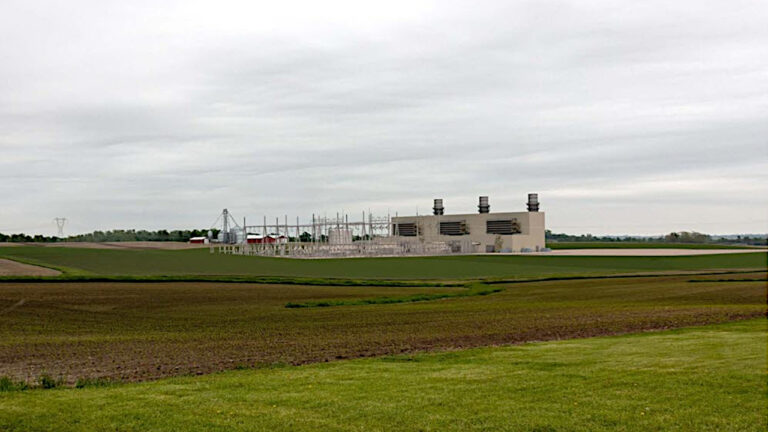
MidAmerican also plans to develop two natural gas-fired combustion turbines at one location in Adair County that will generate 465 megawatts of power.

“We’re focused on ensuring our customers always have reliable power, no matter what’s going on with the weather,” said MidAmerican president and CEO Kelcey Brown. “We’re always looking ahead, planning for decades in the future, to make sure we meet the needs of our customers in the most affordable and sustainable way.”
A planning report released by MidAmerican in November, called a resource evaluation study, examined energy demand projections over a 20-year timeline. The company study projected above-average load growth and the need for near-term capacity additions to meet the growth as soon as 2026.
The study evaluated the energy resources that would most cost-effectively and reliably serve projected customer needs. The report identified solar energy and natural gas-fired combustion turbines as the best resources in the short term and eventually small modular nuclear reactor generation in the long term.
“Through this mix of near-term solar and natural gas generating projects, MidAmerican seeks to address the looming energy supply shortfall and be able to serve customers with reliable and affordable energy well into the future — advancing its all-of-the-above and around-the-clock energy strategy,” MidAmerican said in a statement.
Another renewable energy project, Wind PRIME, was proposed by MidAmerican in 2022. The Iowa Utilities Commission, then known as the Iowa Utilities Board, approved the $3.9 billion Wind PRIME proposal in April 2023, which included 2,042 megawatts of new wind energy and 50 megawatts of solar power. However, the approval came with strict conditions, requiring MidAmerican to assume the risk if the project fails to meet performance guarantees for customer benefits.
Restart of West Branch wind turbine plant
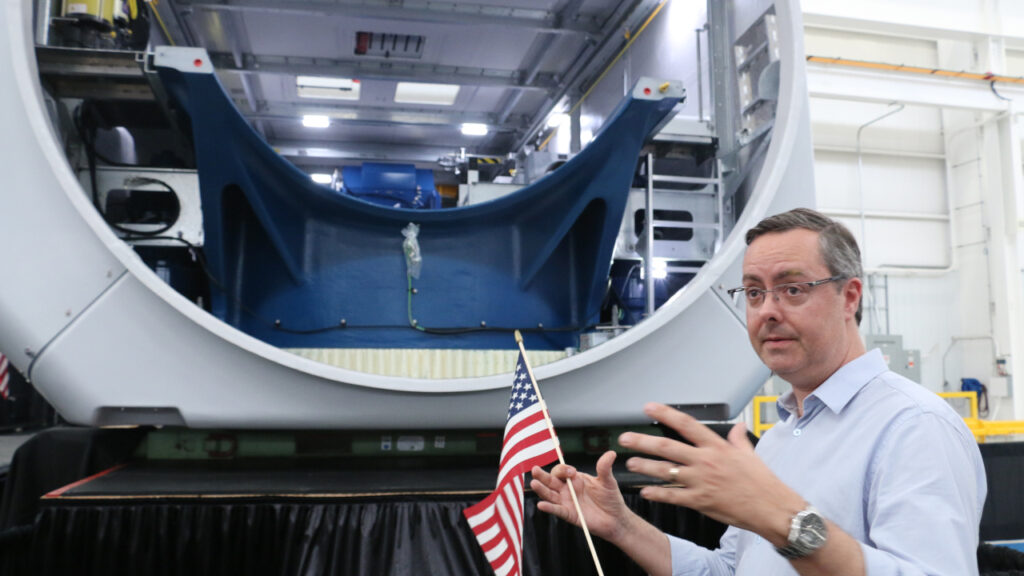
In July, representatives of Nordex USA celebrated the reopening of the company’s wind turbine production facility in West Branch.
Production at the new facility, with more than 100 workers already on board, began earlier this year, producing the company’s first U.S.-made N163/5X turbine.
Production at the plant was previously idled in 2013, when the facility was still owned by Acciona, but Nordex purchased that company in 2016, then announced last year it planned to resume manufacturing at the West Branch plant.
Since 2013, the West Branch facility had been used for warehousing and as a training center for Nordex employees. But since last year’s announcement, the company assembled more than 100 workers and fully retrofitted the plant for wind turbine production. The plant will produce nacelles, hubs and drivetrains for 5-megawatt turbines, with production capacity planned to exceed 2.5 gigawatts annually.
Iowa’s renewable energy boom shows no signs of slowing, with new projects underway and manufacturing returning to the state. Yet as developers, utilities and advocates push toward their shared vision of a renewable-powered grid, they face an increasingly fragmented battlefield of county ordinances and local opposition. The consensus on where Iowa needs to go remains strong — the debate now centers on how fast it can get there.
This is an installment of the Corridor Business Journal’s Energy in Iowa article series, which will extensively examine Iowa’s energy sector and its impact on the region’s economic development. Our next installment will explore Iowa’s potential path to a nuclear energy-powered future.