

A new University of Iowa Health Care study has found that adding electrical nerve stimulation to physical therapy can significantly reduce movement-related pain and fatigue in fibromyalgia patients — and the effects lasted for six months.
The study, published March 27 in JAMA Network Open, is the first real-world trial of transcutaneous electrical nerve stimulation, known as TENS, for fibromyalgia — a chronic condition affecting an estimated 4% to 7% of the population that causes widespread pain, tenderness, and fatigue.

“It is one of the few treatments that specifically targets movement-evoked pain and fatigue, which are major barriers to participation in daily activities,” said lead researcher Kathleen Sluka, a UI professor of physical therapy and rehabilitation science, in a University or Iowa blog post.
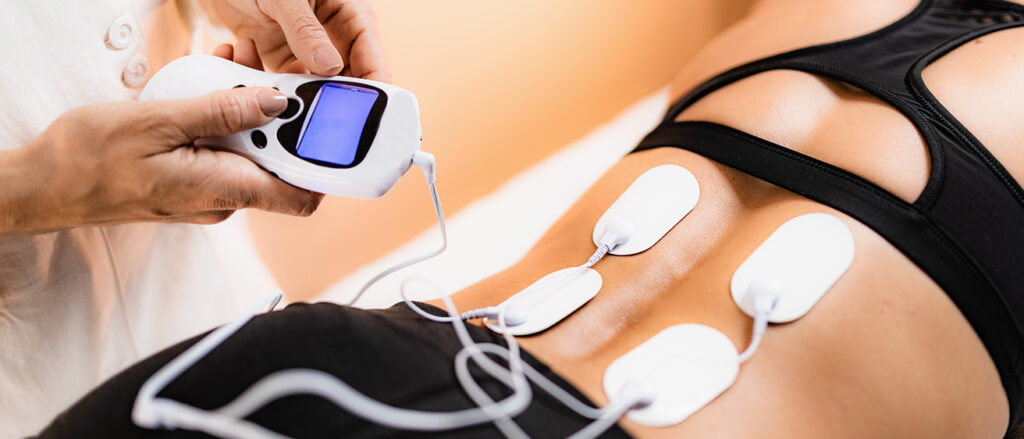
TENS uses a small device with adhesive electrodes to send mild electrical pulses through the skin to interrupt pain signals. Researchers found its pain-reducing effects were comparable to — if not better than — current FDA-approved medications for fibromyalgia.
The fatigue findings were particularly notable, Ms. Sluka said, because few effective treatments currently exist for that symptom.
“We were excited to see that patients also had less fatigue,” she said. “Right now, there are no good treatments for fatigue. So, the fact that we had anything that touched the fatigue was pretty powerful.”
The FM-TIPS study — short for Fibromyalgia TENS in Physical Therapy — was conducted across 28 outpatient physical therapy clinics in six Midwestern health care systems, with 384 participants of varying ages, education levels, and socioeconomic backgrounds. Nearly half came from rural areas.
Clinics were randomized to provide either physical therapy with TENS or physical therapy alone. Participants in the TENS group were asked to use the device for two hours daily for six months, with electrodes placed on the upper and lower back delivering a mixed-frequency signal at the highest intensity each participant could comfortably tolerate.
After 60 days, the PT-TENS group showed significant improvement in movement-evoked pain during treatment, as well as reductions in resting pain and both resting and movement-related fatigue. The physical therapy-only group showed no change in movement-evoked pain.
Results were dose-dependent — participants who used TENS daily for the full 60 days had the best outcomes. And unlike some pain medications, TENS showed no signs of diminishing effectiveness over time.
After the 60-day primary endpoint, the PT-only group was also given TENS units and continued in the study for four more months. Those patients showed the same improvements as the group that had been using TENS all along.
“When we gave the PT-only patients the TENS unit and they started using it, we also saw the same improvements as the PT with TENS patients, which is powerful,” Sluka said.
By six months, 80% of all participants reported finding TENS helpful, 80% were still using it at least once a week, and more than 70% said they felt better after using it.
First author Dana Dailey, a UI assistant research scientist, cautioned that TENS works best as part of a comprehensive treatment plan, not as a standalone solution.
“Using TENS on its own will not give the same benefits,” Ms. Dailey said. “However, the study shows that TENS provides an added benefit on top of any relief from other treatments. All the study participants were also using pain medications and receiving physical therapy, yet TENS still provided additional relief.”
The research was funded by the National Institute of Arthritis and Musculoskeletal and Skin Diseases as part of the HEAL Initiative.