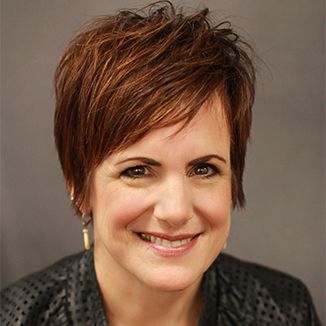

Nate Kaeding, the former University of Iowa All-American and NFL All-Pro kicker who has since become a prominent real estate developer and entrepreneur, is interviewed by J.R. Ogden, celebrated journalist and sports columnist for the Corridor Business Journal.
Mr. Kaeding shares the vision behind his group’s latest passion project: A new, destination-style golf club in the Corridor. He explains the “naturalist” design philosophy driving the project, the unique hybrid “national club” business model they plan to implement, and why he believes there is a significant unmet demand in the market. Additionally, Mr. Kaeding offers a look into the property itself, the focus on a hyper-local food and beverage program, and how the club aims to support the broader amateur golf community.
Sponsored by MidWestOne Bank, this is the latest edition of the CBJ’s Real Success with Nate Kaeding and notable Iowa business and cultural leaders.
Real Success with Nate Kaeding was named Best Business Podcast at the 2024 Iowa Podcast Awards.
J.R. Ogden: Let’s get right to it. You and a group of partners are working on a new golf project here in the Corridor. You’ve called it a “passion project.” What can you tell us about it?
Nate Kaeding: It certainly is a passion project, but one we hope is rooted in a sound business startup strategy as well. For me personally, golf has been a big part of my life since I was a little kid. I grew up playing at places like the old High Point Golf Course and later worked at Quail Creek in North Liberty, which I still consider my home course. There’s a lot of correlation between golfing and kicking — the technique, the mental reps, the pressure — so it became a form of mental training for me.
Now, as a business guy back in Iowa, I see how much camaraderie and business gets done on the golf course. Over the last couple of decades, I’ve been lucky enough to travel and play courses across the world, from Ireland to London. Through that, I’ve seen this interesting revolution in golf course design, which is a more naturalist approach. In the ‘70s and ‘80s, many courses were built as amenities for housing developments. But there’s been a shift, led by places like Bandon Dunes and Sand Valley, toward what they call “destination golf.” This means you find the most beautiful piece of land you can and put a golf course there, because that’s how it started in Scotland and Ireland. You find an architect who just drops a course right on top of the natural land, moving as little dirt as possible and leaning into the existing beauty.
That led me and the folks working on this project to ask, “Why can’t we do that here in Iowa?” We have beautiful nature — this rolling prairie, creek beds, and areas we can replant as native prairie land. I think Iowa is one of the most beautiful places in the world. So, we wanted to take this naturalist design trend and bring it here.
You couple that with the fact that Johnson County doesn’t have a private golf club. We have great public courses, but not a club in the vein of what we envision. When you start looking at the numbers, the business case appears. The Iowa City-Cedar Rapids Corridor has about one private club for every 220,000 people. If you look at peer markets like Dubuque, the Quad Cities, Omaha, and Des Moines, they have one club for about every 80,000 people. The light bulb starts going off, and you see this Venn diagram of passion for golf, these great new design concepts, and a clear unmet demand in our market. It was the intersection of all those things that made us say, “Let’s give this a go.”
Ogden: A new golf course hasn’t been built in this area in quite some time. You mentioned finding the right piece of land was critical. Where is this property, and what will the project look like?
Kaeding: Finding the right property was a year-long process. It had to be the kind of place that we felt lent itself to what we wanted to create. We were looking in a 20-minute circumference from Kinnick Stadium. Somewhere rural and natural, but still convenient for local members. We had a matrix of criteria: A certain acreage, specific soil types, no power lines, not off gravel. The list shrinks pretty quickly.
The piece of property we’ve found and now have under contract is just north of the village of Morse, which is about halfway between Solon and Iowa City. It’s one of the most beautiful parts of the state, with those rolling hills and long sight lines. We have upwards of 300 acres to work with. We wanted an expansive, meandering feel, giving a great designer enough land so they don’t feel hamstrung. Most courses around here are probably closer to 150 acres. We want the 18 holes to feel like chapters in a story, where you’re up on a high ridge with the wind blowing, then down in a holler by the creek.
As for what it will look like, it’s really founded on being a golfing club and a social club. Compared to a traditional country club, there will be less focus on buildings and other programming. We’re not going to have a pool or pickleball courts. The clubhouse and restaurant will be relatively smaller than some of the bigger, more expansive clubhouses. We want to tighten up the vertical construction to what is essential for an awesome clubhouse experience, focusing on the heart and soul of the club. It isn’t meant to be anything more than a great place for golf and camaraderie.
Ogden: You mentioned this won’t be a standard country club. What kind of membership model are you envisioning? Will it be a fully private club?
Kaeding: This is where we get a little “golf nerdy”. What we’re envisioning is what’s known in golf parlance as a “national golf club.” A traditional country club has one main membership category, which is mostly local families. Our model will feature a smaller group of local members and a larger group of national members, or folks who live more than 60 miles away. With Iowa City being a beloved college town right off I-80, we know there’s demand from people who want to come back, visit, and have a club to enjoy. They would pay less in annual dues, and for many, it would be their second club. This model has become quite popular.
The other really exciting thing is a hybrid component, which is common in the UK and Europe. This isn’t going to be a place with pearly gates where only members are allowed. We want to block off a select amount of tee times each week or year where the general public can come out and play the course. I was just in the UK, and at a place like Royal County Down, often voted one of the best courses in the world, a schmuck from Iowa like myself could go book a tee time. Those clubs want to share their course.
We want to build something and share it, not keep it all to ourselves. Now, on peak times, like the Friday before a home football game, those blocks will be reserved for members, as they should be. But we want to create a model that allows people in the community to come out and enjoy the course a couple of times a year, make a half-day of it, and have a great meal afterward. It allows us to be flexible. If we have open spots on the tee sheet, why let the course sit empty? We’re trying to come at this without the constraint of how it’s always been done, pulling ideas from proven models and putting our own spin on it.
Ogden: What is the current status of the project? Where are you in the process of making this a reality?
Kaeding: It feels like we’ve been working on this for a long time, but there’s a long road ahead. Finding the property was the first major step; it’s hard to tell the story or raise capital without a specific place. That took a full year, during which we were also doing tons of research, building our project budget, and creating the pro forma to ensure this is a feasible and sustainable project.
Right now, we’re working on several tracks simultaneously. One is the rezoning process with Johnson County, which involves changing the land use from row crops and pasture to rural recreation. That requires bringing on our civil engineers, architects, environmental consultants, and putting together all the necessary plans.
At the same time, we’re in the middle of the capital raise. We have a great group of about 45-50 individual investors so far, some at higher levels, some at lower. A core principle for us is that we want to go into this without any debt, so we need to raise the entirety of the project budget upfront. There are still some stars that need to align to fill that group out, but I’m super excited about the kind of people coming on board. It’s a great mix of local Iowa City and Cedar Rapids folks who are deeply connected here, and also people for whom Iowa City holds a special place in their heart, such as alumni and others who are excited to be part of creating something enduring here. It’s a rich base to pull from. So we have several balls in the air, but we’re making good progress.
Ogden: With such a focus on a “naturalist” design, the choice of a course architect must be paramount. What is your approach to selecting a designer?
Kaeding: That’s a fun part of it. The folks we’ve been talking to about the project have not done work in the state of Iowa yet, which is an exciting opportunity. It would be great for the game of golf in the state to bring in some of the best in the world to work on this particular piece of property.
We want to make sure the architect we choose is a match for the kind of experience we want to create that has that naturalist, minimalist design. There are several architects who really specialize in finding harmony with nature and working around natural features in a responsible way. Their bread and butter is creating a remarkable course by highlighting what’s already there. We’ll get to that point eventually, but first, we need to complete our due diligence on the site.
Ogden: You’ve described the land as beautiful. What specific features of the property lend themselves to this naturalist vision?
Kaeding: That is a big driving factor for me personally. Iowa has extraordinary natural beauty, but we are 49th out of 50 states in terms of how much land is dedicated to outdoor recreation. We need more of it. For me, golf today is a chance to put the phone away and spend four hours outdoors with family or friends.
This particular piece of property is special. We came up with a little saying for it: “We’re in Grant Wood country.” We want to create a golf course set on top of a Grant Wood painting. The property has these long, unobstructed 360-degree sightlines from its big, gentle, rolling hills. You can see the whole Iowa countryside, such as silos, barns, timber in the distance. Then you get down into the lower areas where a creek meanders through the property. There’s also an old, abandoned rail line that runs through it, which presents cool design opportunities. Can you build tee boxes on top of the rail line? Can you use the unique cuts and rumbly areas? There are also beautiful old oak trees to frame holes. It has everything that is Iowa’s natural beauty in those 300 acres.
What gets really exciting is when you talk to architects about restoring the native prairie grasses between the holes, so you feel like you’re walking amongst the prairie as it was before commercial agriculture. And it’s set amongst working farmland. You’ll have old barbed wire fences and cornfields at the edges of the course. A cattle farmer is adjacent to the property; you might get some moos in your backswing. That’s Iowa, and it’s awesome.
Ogden: You just mentioned the neighboring cattle farmer. I know you’re also invested in several local restaurants. What’s the vision for the food and beverage program at the club?
Kaeding: A thoughtful food and beverage program, coupled with warm hospitality, is a big deal for us. We think there’s a great opportunity to do a lot of hyper-local sourcing. We’re not envisioning a massive menu, but we want it to be special. I mentioned beef, for example. Morse has a rich cattle history, and there’s no reason we shouldn’t work with local farmers and processors.
You’re also in an awesome area with Wilson’s Apple Orchard just down the street and Dan and Debbie’s Creamery up in Ely. We’ve even talked about having our own chicken coop on-site for farm-fresh eggs, or a small greenhouse for seasonal produce. When you’re at the club, we want you to feel like you’re in one place, and that’s Iowa. How can we create the most quintessential Iowa golfing experience, from the surroundings to the hospitality to the food on your plate? That will be a big component of the culture.
Ogden: A project of this scale takes time. What is a realistic timeline for when golfers might be able to play this course?
Kaeding: It definitely takes time. It could take a year or more just for the approvals, the capital raise, and all the feasibility work we’re in right now. In the Midwest, with our seasons, construction of an 18-hole course is typically a two-season process, followed by the grow-in period to let the course mature. So, in a best-case, perfect-world scenario, we could be out there enjoying it in 2029.
But I’m in the development world, and curveballs get thrown your way. We’re doing this with a long-term horizon in mind. When you go to old clubs in Ireland that have been around since 1890, you see photos of the founding members. These things endure if you do them right. The chance to create a place I can bring my grandkids to and a place that’s here long after I’m gone is exciting to me. We will have preserved over 300 acres of beautiful Iowa land for a sport we all love. This is one of those things that has a long arc to it, and that gets all of us working on this project pretty excited.
Ogden: Beyond just being a place to play, how do you see this club integrating with and supporting the broader golf community in the region?
Kaeding: That’s something we’ve been talking quite a bit about. We want to connect with the amateur golf scene in the Corridor. The club will have a caddie program, which will be very unique for the area. The University of Iowa now has an Evans Scholars Foundation house, which is an amazing program that provides full college scholarships to students who work as caddies. We’re excited about the opportunity for our caddie program to plug directly into that. It’s a great mentorship opportunity and a great high school job.
We’ve also talked about creating a scholarship at each of the Johnson County high schools for a golfer to have access to the course each year. We could host a “Corridor Jamboree” for high school teams. We would love to be an asset for the University of Iowa golf teams as well. Ultimately, we want to be in a position to host great amateur events, whether it’s for high schoolers, the Iowa Junior PGA tour, or even NCAA-level events down the road. Supporting local and amateur golf is a core element of what we want to create.
Ogden: Finally, as a former athlete who has become a successful entrepreneur, did you ever envision yourself taking on a project like developing a golf course?
Kaeding: Absolutely not. But I also want to be clear that I’m just one small piece of the team. There’s a collection of awesome people working together to try to pull this off. My post-NFL mission has been to come back to my home state and create sustainable, impactful businesses. I’m a big believer that for things to be enduring, they also need to be profitable and grounded in sound business strategy.
I put this project in the bucket of, “Why not Iowa? Why not us?” You go to these old clubs and realize they were started by a group of regular people who got together and just did it. Why can’t we do it today? That’s been a rallying cry for us. We’re at a point where we’re asking, “If we want this for our community, why don’t we do it ourselves?” It’s a worthwhile endeavor, and I believe we can create something that will mean a lot not only to us but to the broader region for generations to come.