
The oft-amended Linn County ordinance governing the development of gas-fired power plants in the county’s unincorporated areas was amended yet again this week by the Board of Supervisors, with a fourth and final reading now planned for March 23.
But the amendments approved March 18 were not unanimously supported by the board.
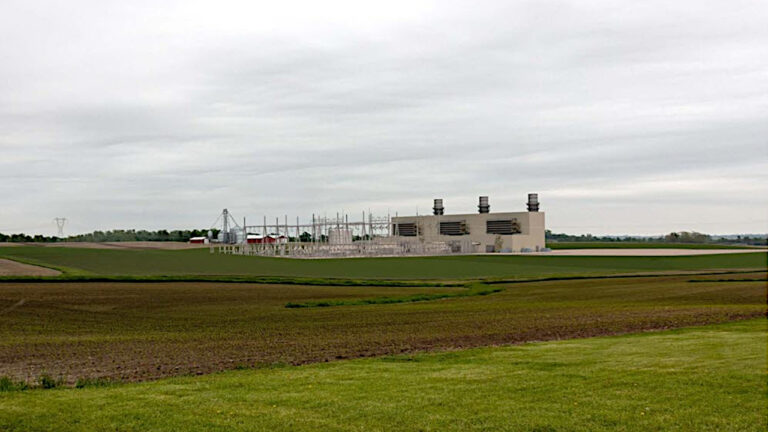
The zoning ordinance, which will add gas-fired power plants as an allowable use in the county’s new EU-2 zoning designation while adding a series of zoning conditions, is intended to create specific standards for the proposed locations of natural gas power plant projects in rural Linn County. It would not apply to power plants located within cities or population centers.
In addition to a range of setback requirements from neighboring properties, the amendment also adds standards for noise, airport safety areas, air quality, impacts on roads, and the information that must be included in applications for new plants.
Two amendments were already approved by supervisors during the ordinance’s first reading in early March.
First, the ordinance specifies a default 2.25-mile setback distance from cities and population centers, but one amendment approved March 9 provided a potential 25% reduction in the setback distance under certain circumstances – a move that supervisors said added some “flexibility” on the standard.
That amendment was further modified for the ordinance’s third reading March 18, extending the potential setback reduction to 50%. The board of supervisors would still have to approve any setback reductions on a case-by-case basis.
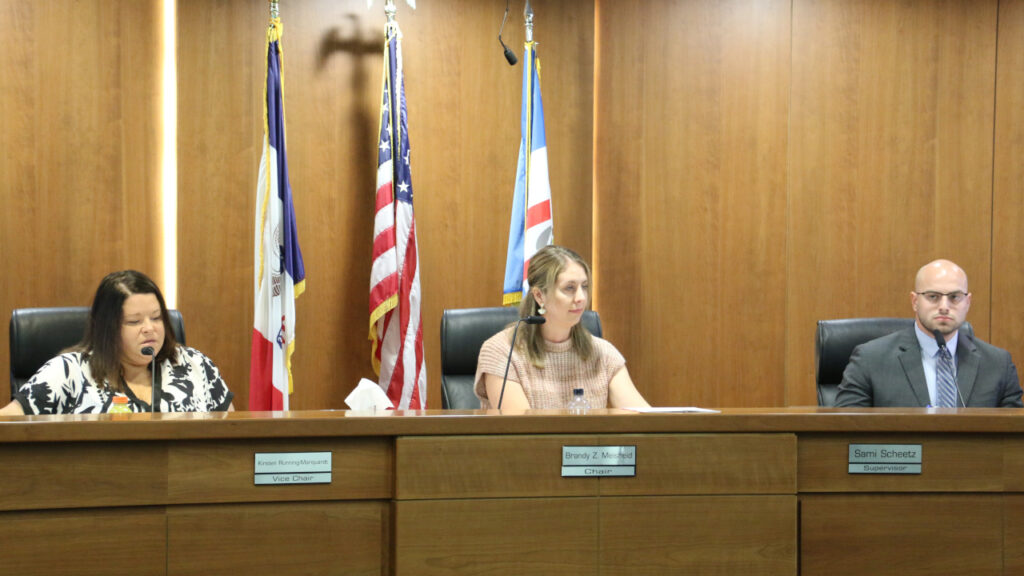
Supervisors Brandy Z. Meisheid and Sami Scheetz said they both supported the setback reduction for certain projects.
“I think we have to allow for creativity and flexibility moving forward,” Ms. Meisheid said. “There’s so many things that are coming to Linn County that I want to make sure that future boards have options moving forward.”
“I think it’s a service, to us as a board and to future boards, to allow a board of supervisors, in case-by-case considerations, to adjust that setback percentage,” Mr. Scheetz said. “And I think giving us more flexibility is a good thing … if there’s specific cases that come up, board members that are elected by the people are allowed to have flexibility and not have really firm limits as to what they can consider. Boards can choose to basically stick strong and stick to a 2.25 (mile setback), or if there are certain projects that they think makes sense or fit within different comprehensive plans, or (aren’t) going to do that much economic damage to a certain community depending on where the project is placed, I just think it’s good for the elected officials to have flexibility and not have their hands tied.”
Supervisor board chair Kirsten Running-Marquardt disagreed.
“There’s only two people that I’ve heard that would want us to have greater flexibility, and they were both people who would benefit millions of dollars worth personally, and may not even live on that land and live in a county outside of Linn County,” she said. “I think this moves us in the wrong direction for our ordinance … the residents I have spoken to have told me that this hasn’t gone far enough to protect them, their property values and their economic considerations, for their homes and investments.”
A second amendment approved March 18 will allow property owners to voluntarily waive property setback requirements included in the ordinance. Those setbacks mandate that natural gas-fired power plants must be located at least 1,000 feet from dwellings and places of public assembly, and then 200 feet from property lines.
Ms. Meisheid and Mr. Scheetz supported the amendment, while Ms. Running-Marquardt opposed it.
“If a landowner comes and says, I want to voluntarily reduce my setback – again, this would still come to us, and I think that’s really important for the board of supervisors to have final say on whether we even allow for that setback reduction to take place,” Mr. Scheetz said. “But I do think if property owners, for whatever reason, feel the need to have less of a setback on their property, I think that’s reasonable.”
“Being somebody who’s pro-property owner rights, I think it’s in our best interest to not only allow the property owner to waive the setback if they so choose, but I also think that this allows us to just be flexible and creative as we move forward,” Ms. Meisheid said.
Ms. Running-Marquardt contrasted the ordinance’s setback requirements with those of the county’s previously-approved ordinances for wind and solar generating facilities.
“The difference with wind and solar is there’s not the pollution of burning fossil fuel (in those cases),” she said. “That has other economic and community quality of life considerations, and that’s what’s different for me.”
In addition, she said, “we have several big, huge companies that have a lot of money, and I think that puts them in a terrible spot.”
Other changes to the originally-proposed ordinance:
- An amendment approved March 9 will require a waste management plan for gas-fired power plant construction projects. The amendment’s verbiage is similar to that approved for the county’s data center ordinance, requiring developers to document the estimated values and types of material to be generated during construction; identification of materials proposed for recycling, salvage and reuse; designated recycling disposal facilities, procedures for on-site, material separation and storage; and documentation requirements for final disposal or diversion.
- An amendment approved March 16 modifies the ordinance’s Host Community Agreement, clarifying that the HCA specifically addresses land use impacts and that “costs or compensation in the host community agreement can vary from site to site, so one site might not have the same host community agreement as another site, and it’s based on site-specific cause project constraints.”
The fourth, and potentially final, reading of the gas-fired power plant ordinance, including its amendments, is set for the board’s work session Monday, March 23, beginning at 10 a.m.
The ordinance comes as Alliant Energy has announced plans to pursue a site near Fairfax for a new natural gas-fired power plant. A previous proposal to build the plant in the Fairfax city limits was dropped amid community pushback and safety concerns raised by the Eastern Iowa Airport.
County Planning and Development director Charlie Nichols said no specific plan for the new site has yet been submitted to county officials. But Alliant is set to host a public meeting about their plans Monday, March 23, beginning at 6 p.m. at The Hotel at Kirkwood Center.