
A rezoning application that will allow the development of a memory care facility north of Hiawatha was approved by the Linn County Board of Supervisors Wednesday, Feb. 18.
The rezoning, which was approved on a 2-1 vote, came despite vocal concerns from a number of neighboring property owners, who said that while they didn’t oppose the memory care facility, they felt the rezoning would allow other potential developments on the site, altering the rural residential character of the neighborhood.
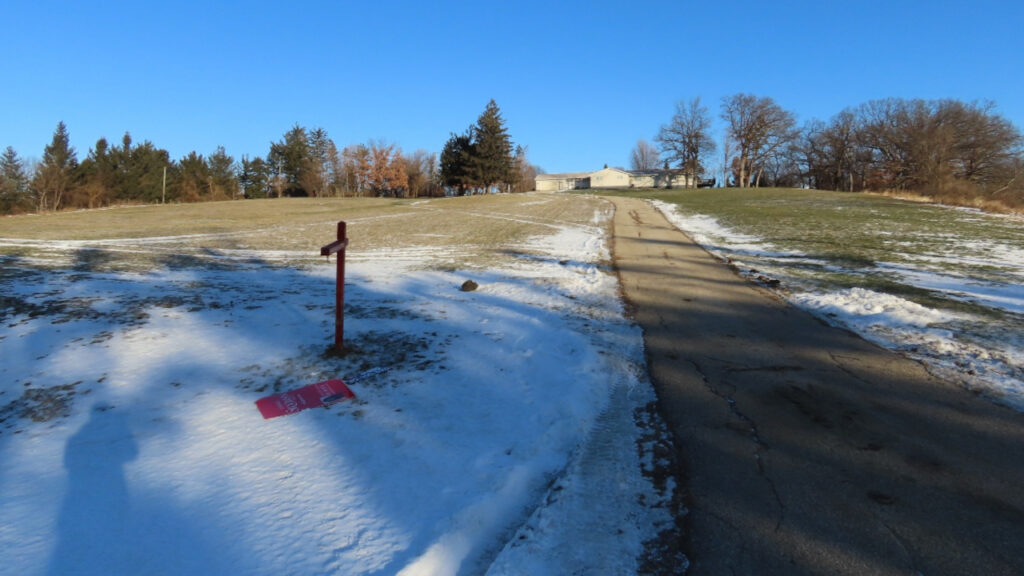
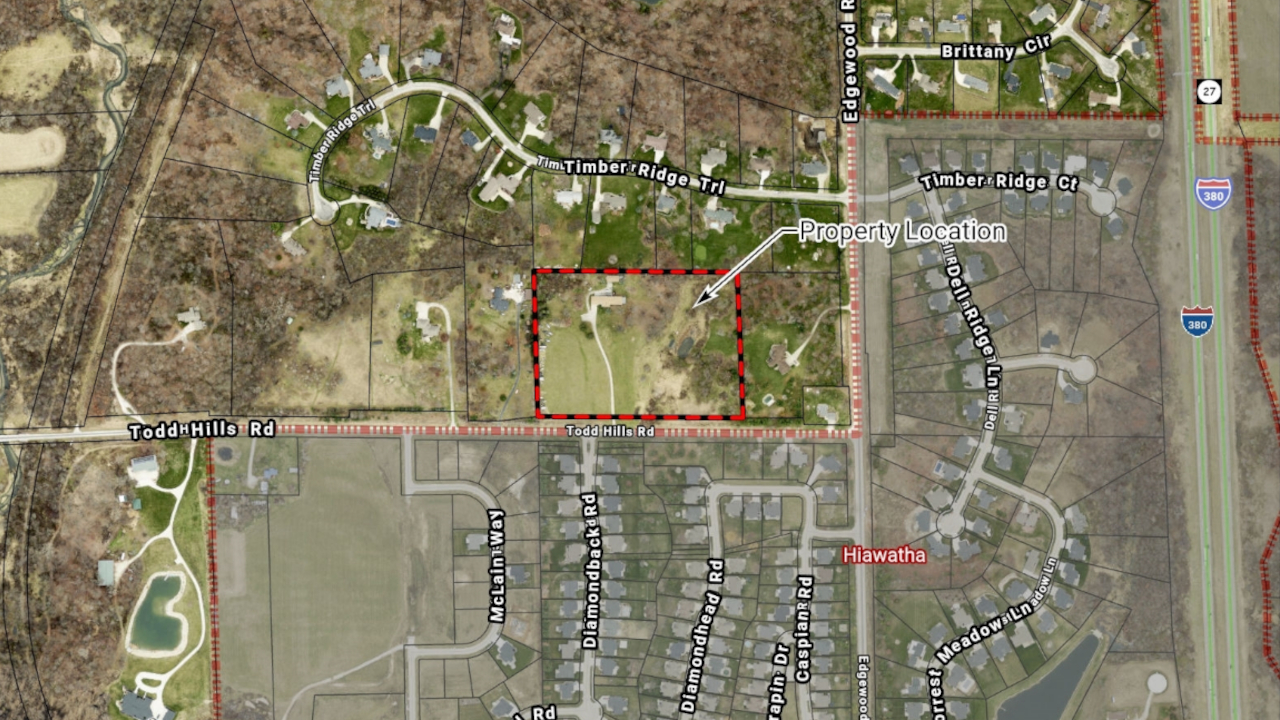
The plan, submitted by Jerry Horak of Riverside, will bring a state-licensed residential memory care facility for dementia and Alzheimer’s disease patients to a 11.68-acre property at 3541 Todd Hills Road, an unincorporated area just north of Hiawatha.
Plans for the project call for remodeling an existing home on the property, formerly occupied by Richard Rojek, who passed away in March 2025. A deck is set to be added, along with other modifications to protect the residents’ safety.
The facility will accommodate up to 14 residents.
The county Planning and Zoning Commission had voted 3-2 Jan. 20 to recommend denial of the application, after hearing arguments from a number of neighboring residents that, despite county officials’ assertion to the contrary, the application comprised “spot zoning” for a business use and was incompatible with the surrounding residential neighborhoods.
Natalie Ramirez, an architect representing Mr. Horak, said the facility will be operated as a franchise of an Omaha-based company, and will be the first of its kind in Iowa.
Both neighbors and supervisors agreed that they weren’t opposed to the memory care unit, only to the long-term implications of rezoning.
Brad Wylam, a planner with Linn County Planning & Development, said that Mr. Horak’s application asked to rezone the property from its current Rural Residential 3-Acre (RR3) designation to an Urban Services Residential – Multi-Family (USRMF) designation, allowing a memory care facility for eight or more residents. He noted that his department recommended approval of the rezoning request based on compatibility with county standards and a high score on the county’s Land Evaluation Site Assessment (LESA) evaluation criteria.
A petition bearing 131 signatures was submitted to Linn County opposing the proposal, along with 33 emails in opposition. Many speakers noted that the property owners have an agreement for voluntary annexation into the city of Hiawatha, and asked why the property needed to be rezoned before that annexation occurred.
Mr. Wylam said the voluntary annexation agreement “basically allows them to hook up to city services for water and sewer, but that annexation isn’t underway by any means.There’s no timeline as far as that goes.”
He also said that any annexation by Hiawatha would likely allow the facility to continue operating, no matter what zoning category was implemented for the area.
Officials discussed an alternative zoning plan, which would have allowed the facility to be operated as a conditional use permit in the existing RR3 zoning district, if the permit application were approved by the Zoning Board of Adjustment.
Supervisor Brandy Z. Meisheid said she favored that approach over fully rezoning the property.
“I’ve shared my concerns about being favorable towards this due to the long-term use and that we don’t know what could go there, what it could become,” she said. “In addition to that, I don’t feel comfortable approving this in the light that if it were to fail the Board of Adjustment, I feel like we’re rezoning it blindly. And I know my colleagues have previously shared they’re favorable towards the growth. I just am not comfortable with rezoning something without knowing the use and how it could impact the community in the long term.”
Supervisor Sami Scheetz said he was comfortable with the rezoning, as well as potential longer-term developments on the site, as important steps for the county’s future development. The rezoning will mark the first time a multi-family rezoning application has been approved in unincorporated Linn County, officials have said.
“To say that this would ruin the character or be really detrimental to the neighborhood is just not something that holds sway with me,” he said. “I just don’t think it’s good practice to change an entire county ordinance because of some concerns on a single project on a single parcel in the county.”
He also noted that the board had recently discussed hiring a rural economic development director for the county.
“If we want to grow our rural communities, we cannot deny every single instance that might have the possibility, decades from now, of having housing,” he said. “I don’t want to be dismissive or flippant about the neighbor’s concerns. I hear you. But I really do truly believe that this is a good applicant, and that’s what we’re considering today, is the application to rezone this parcel. (Also), I don’t think it is a real problem. If decades from now, somebody says we want to put some condos and townhouses, I don’t think that’s going to be harmful to the neighborhood.”
Board chair Kirsten Running-Marquardt also noted she wasn’t concerned about the future development of multi-family housing in the county’s rural areas.
“In my neighborhood, multi-family, residential housing enriches my community,” she said. “I understand that isn’t how people always see it, but for me, it does enrich my community, my neighborhood and my personal life.”
She also said she recognized a “shift” in dialogue about the proposal, one that was generally receptive to the development of a memory care facility.
“I have thought about it and been deliberate, and I do feel comfortable with moving forward,” she said.