
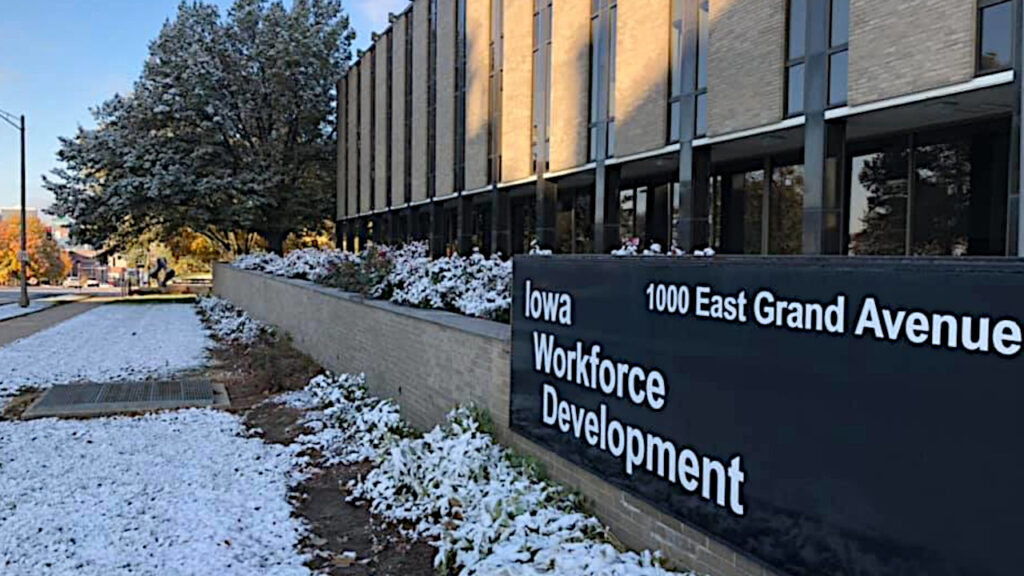
Iowa’s seasonally adjusted unemployment rate declined to 3.5% in November, down from 3.7% in September but higher than the 3.3% rate reported one year earlier, according to the latest numbers from Iowa Workforce Development. An October unemployment rate was not issued because of a government shutdown.
The state’s labor force participation rate held steady at 67.5% in November, matching September’s rate and exceeding the November 2024 level of 66.9% by 0.6 percentage points. The national unemployment rate increased to 4.6% in November.
The number of unemployed Iowans rose by 5,100 compared with November 2024. At the same time, Iowa’s workforce continued to grow, with 1,683,000 residents employed in November, an increase of 22,400 from one year earlier. The total labor force expanded by 27,500 people over the same period.
“November’s report is an indication that the increase we’ve seen over the last few months in labor force participation is translating to more people working,” said Beth Townsend, executive director of Iowa Workforce Development. She cited hiring gains in health services, wholesale trade and construction, noting the state ended November with 9,000 more jobs than a year earlier.
Seasonally adjusted nonfarm employment rose by 4,600 jobs in November, bringing total nonfarm employment to 1,599,800. The monthly increase contrasts with the average October-to-November change of a 130-job decline over the past decade.
Educational and health services added 1,100 jobs during the month, while trade, transportation and warehousing increased by 1,000 jobs. Construction employment rose by 900 jobs, a gain partially attributed to milder late fall weather.
Within the private sector, health services added 900 jobs and wholesale trade gained 800 jobs. Professional and business services recorded a net increase, with administrative and support services adding 1,000 jobs, offset by a loss of 200 positions in professional, scientific and technical services. Government employment declined by 200 jobs in November.
Over the past 12 months, Iowa’s nonfarm employment has increased by 9,000 jobs, including a gain of 7,400 positions in private industry. Construction posted the largest increase, up 8,100 jobs, followed by private education and health services, which added 5,800 jobs. Most of the growth in that sector came from health care and social assistance, which increased by 4,300 jobs.
Retail trade added 3,400 jobs over the year, while professional and business services shed 3,400 positions. Other sectors reporting year-over-year declines included leisure and hospitality, down 3,200 jobs; financial activities, down 1,600; and manufacturing, down 1,000, largely due to a reduction of 2,300 jobs in durable goods manufacturing.